Faith in action. The words hit me as I walked past the company values of Human Nature, a Filipino social enterprise that distributes personal care products. Eighty percent of Filipinos identify as Catholics, and since Spanish imperialism, when priests were spiritual and political leaders, religion plus X has been like ice cream and apple pie. It’s a sharp contrast to the US dollar, where “In God We Trust” is as tied to religion as business will openly claim.

As a knowledge worker in the United States, there’s a social contract between employer and employee. I do my job, you pay me. When expectations are no longer met, we go our separate ways. It’s a self-serving transaction. It sends the message that people are worth what they do.
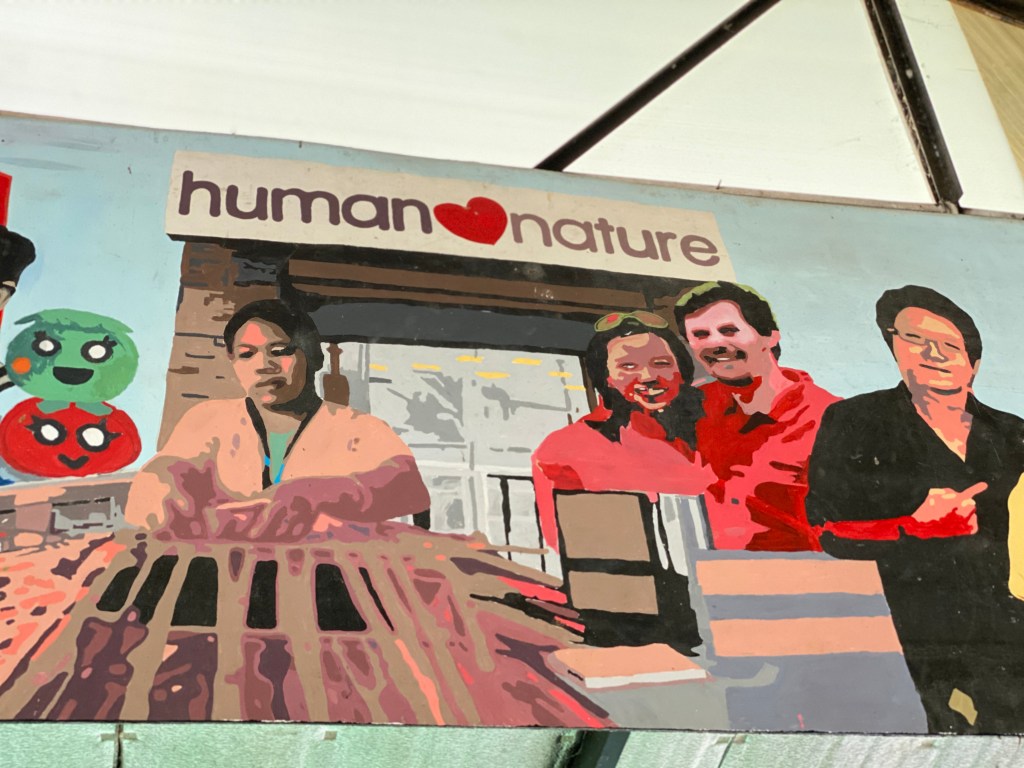
Human Nature’s mission is to elevate the world’s poor from the bottom of the pyramid (people who live on under $2.50 USD per day) to the middle class. Policies and practices are designed to elevate quality of family life; boost skills and job performance; develop spiritual lives and community engagement; and create financial self-sufficiency. With a workforce of over 630 people, Human Nature pays employees three times the average daily wage (> $18 USD) and provides job security with a no-firing policy. That’s right: no firing, no matter what.
Mike Go, a member of Human Nature’s Social Enterprise Development Team, shared about an employee who over reported expenses and pocketed the excess, stealing company money not once, but four times. Even when he asked to be fired, management transferred him to roles that distanced him from his vices. Letting him go would’ve cut financial losses, but a job could make all the difference in this man’s ability to shelter, feed, and educate his family. There’s more at stake than money.
“Give the best to the least, and the least will become the best,” explained Mike.
An eye for an eye is human nature, but the best it can do is to correct behavior.
Grace gives people what they don’t deserve. It tells people they are worth more than their mistakes, and in doing so, it has the power to change identities. In his book Atomic Habits, James Clear argues that people’s behaviors are driven and sustained by identity, not outcomes. If you believe you are a healthy person, you are more likely to diet and exercise than if your goal is to lose weight. By changing how people perceive themselves, we reshape behaviors in lasting, meaningful ways.
When the objective for business is to maximize profits, doling out second chances seems like inconsistent, irrational, and unsustainable practice. Not every business can be bound to a social mission, but leaders have a responsibility to build peoples’ identities and cultures that help them become their best selves.
 Jennifer Lauren
Leave a comment